
Finding pet friendly rentals in London can feel like a full-time job. With fewer than one in ten London landlords currently advertising as pet friendly, dog and cat owners face a smaller, more competitive slice of the rental market than everyone else. Russell Hunt, founder of Pets Lets, has spent over 20 years helping renters with pets find a home in the capital – here is his practical guide to securing one.
It is estimated that around a quarter of UK households own a dog, and many more have cats, yet only a small proportion of landlords accept pets. In London, where the majority of residents rent, that shortage is felt most acutely – which is exactly why preparation and the right approach matter so much.
What the Renters’ Rights Act means for pet owners in London
The rules have changed. The Renters’ Rights Act is now law, giving tenants the right to request a pet and preventing landlords from unreasonably refusing. That is a significant shift away from the old default ‘no pets’ clause. It is not an automatic ‘yes’, however – a landlord can still refuse with reasonable justification, and may require pet damage insurance. Knowing your rights, and presenting yourself as a responsible tenant, remains the key to success.
‘No pet’ clauses and what a landlord can ask for
A ‘no pet’ clause was traditionally used by landlords worried about damage. If you are in an existing tenancy and would like a pet, always get your landlord’s written permission first. A landlord should only refuse on reasonable grounds – for example the size of the pet relative to the property. Your agreement may include sensible conditions, such as paying for professional cleaning when you move out and keeping the garden clear.
Beware of ‘pet rent’
Since the Tenant Fees Act 2019 capped deposits at five weeks’ rent, some landlords have introduced a monthly ‘pet rent’ to offset the perceived risk of damage – typically £20–£50 per month. Factor this into your budget when comparing properties, and use our rent affordability calculator to see what you can comfortably afford.
Where to look for pet friendly rentals in London
Portals such as Zoopla and SpareRoom now offer a pet-friendly filter. Beyond the portals, a few practical pointers:
- Pet friendly houses are usually easier to find than flats – with flats, it often comes down to the block’s communal policy.
- For flats, look for a conversion with its own front door and no communal areas. Some first-floor flats have split rear gardens with their own stairs, which can work well for a dog.
- Furnished properties are frequently easier to secure than unfurnished ones.
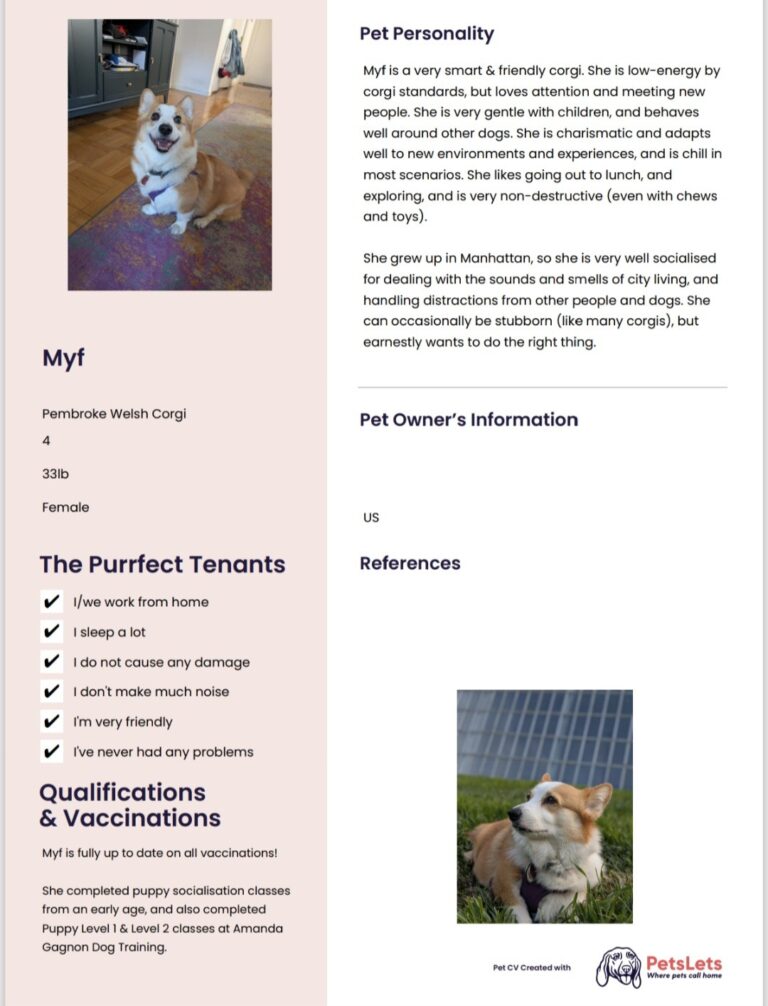
Prepare a pet CV before you start
The single most effective tool for winning over a landlord is a pet CV. It reassures landlords that your dog or cat is well cared for and that you are a responsible owner. Include your pet’s temperament, their vaccination, flea and worming dates, who looks after them during the day, and a reference – often your vet. You can create your pet CV here.
Which London areas and estate agents to target
London’s pet-friendly supply is not spread evenly. Areas bordering large green spaces – the commons and royal parks across South West and North London in particular – tend to attract more pet-friendly landlords and dog-owning agents. When you begin your search:
- Be focused. Know the neighbourhoods, even the specific streets, that fit your budget.
- Stay in regular contact with local estate agents – they deal with hundreds of applicants and you will be quickly forgotten if you do not chase them.
- Identify pet-friendly agents – an office dog is a good clue that they will work harder to persuade a landlord.
- Research nearby parks and commons on Google Maps and check they are dog friendly before you commit to an area.
- Offer to meet the landlord with your dog so they can see for themselves how well behaved they are.
Getting the tenancy agreement right
If you find the perfect furnished property but would prefer it unfurnished, ask the landlord about a 12-month rather than six-month tenancy – it can make any furniture storage costs worthwhile for them. Once you have agreed terms, make sure the tenancy agreement is clear about what is expected of you, such as end-of-tenancy professional cleaning. The Dogs Trust’s Lets With Pets website is a helpful resource for tenants, landlords and letting agents alike.
Let Pets Lets help you find a pet friendly rental in London
Russell Hunt worked as a search and relocation agent for 20 years before founding Pets Lets, having seen first-hand how difficult it is to find pet friendly rental accommodation in the capital. Whether you want full relocation support or a DIY toolkit, our pet-friendly property services are built entirely around renting with pets. Get in touch to tell us what you are looking for and we will help you find a home that welcomes your pet.
Pet friendly rentals in London: frequently asked questions
Can a landlord refuse pets in London?
Since the Renters’ Rights Act became law, a landlord can no longer unreasonably refuse a tenant’s request to keep a pet. They must consider each request on its merits and can only refuse where they have a genuine, reasonable justification.
How much is ‘pet rent’ in London?
Where it is charged, pet rent typically ranges from £20 to £50 per month. Since the Tenant Fees Act 2019 capped deposits at five weeks’ rent, some landlords use pet rent to offset the perceived risk of damage.
Is it easier to rent a flat or a house with a pet in London?
Houses are generally easier, as there is no communal policy to satisfy. With flats, look for a conversion with its own front door and no shared areas, which landlords and freeholders are more likely to approve.
Do I need a pet CV to rent in London?
It is not a legal requirement, but a well-prepared pet CV is the most effective way to reassure a landlord and stand out in a competitive market. You can create yours here.